Dairy
Cottage cheese
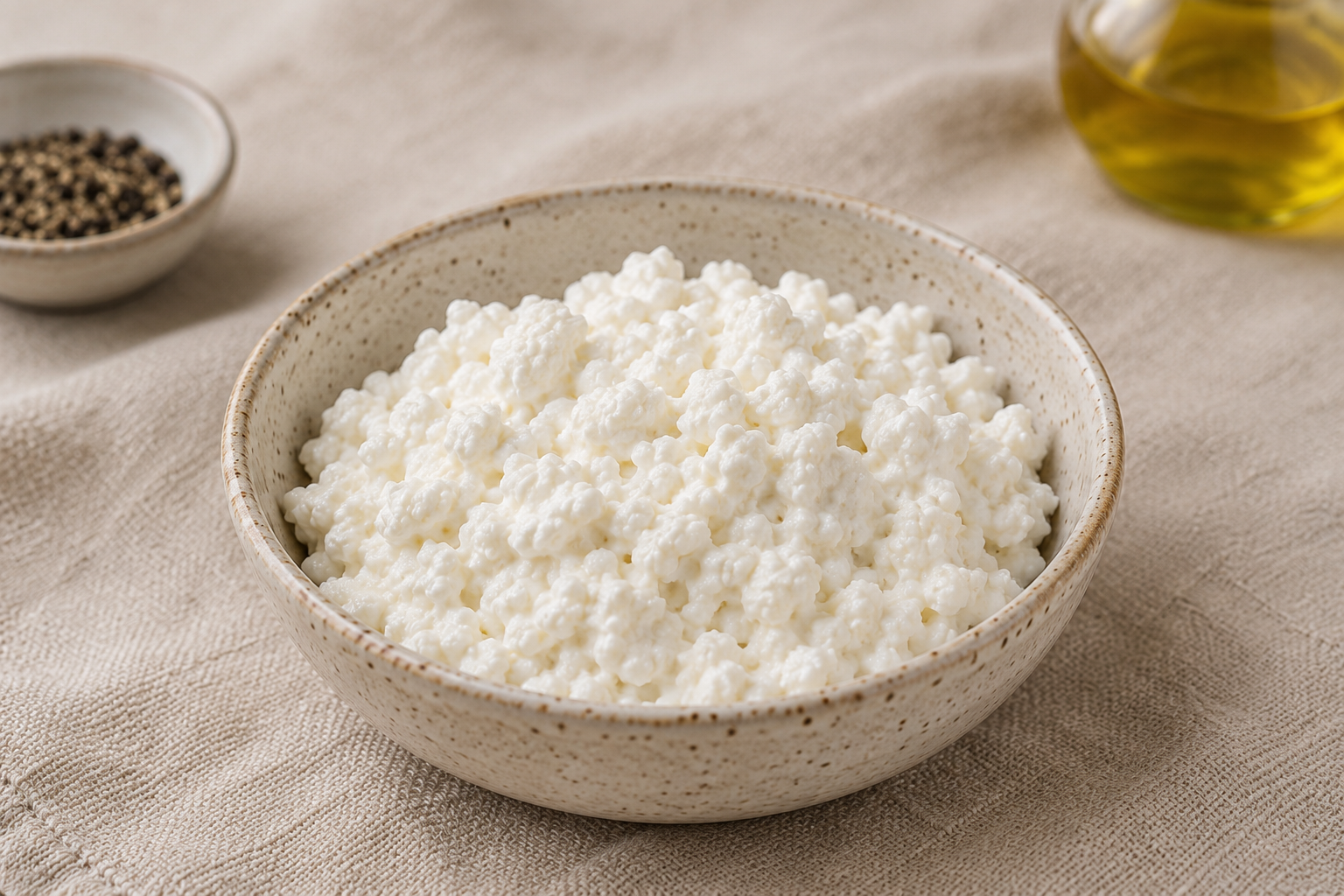
Cottage cheese is a fresh dairy cheese with soft curds, a mild tangy flavour and a creamy texture. It is rich in complete protein and usually lower in fat than many hard cheeses, making it a practical vegetarian protein booster for breakfasts, toast, bowls, dips, sauces and savoury snacks.
Macros are per 100g of the cooked ingredient (e.g. oats, quinoa, lentils and other pantry staples that require cooking). Nutritional values are estimated using recognised nutrition databases and calorie-tracking software to provide a practical guide, although they may vary depending on the exact ingredients and brands you use.
Origin
Cottage cheese belongs to a long tradition of simple fresh cheeses made by curdling milk and draining the curds. Similar fresh curd cheeses exist across Europe, the Middle East and South Asia, but cottage cheese became especially common in British and American home cooking because it was easy to make from leftover milk. Today, it is widely used as a high-protein dairy ingredient in both sweet and savoury meals.
Culinary uses
- · toast
- · breakfast bowls
- · dips
- · salads
- · pancakes
- · pasta sauces
- · savoury snacks
Cooking guide
Cottage cheese is ready to eat straight from the tub. Use it cold in breakfast bowls, salads, toast toppings, dips and spreads, or blend it until smooth for a higher-protein creamy sauce. It can be stirred into pancake batter, muffins, scrambled eggs, pasta sauces or baked dishes. Avoid boiling it aggressively, as the curds can separate and become grainy. For smoother recipes, blend before heating and warm gently.
Storage
Keep cottage cheese refrigerated and use by the date on the pack. Once opened, reseal tightly and use within 3–5 days, depending on the brand guidance. Do not leave it at room temperature for long periods. If liquid separates, stir it back in unless the cottage cheese smells sour, fizzy or unpleasant.
Buying guide
Choose plain cottage cheese for the most versatile option. Low-fat cottage cheese is useful if you want higher protein with fewer calories, while full-fat versions are creamier and richer. Check the salt level, as some brands are quite salty. Avoid flavoured sweet versions if you want to use it in savoury recipes. For smoother dips and sauces, small-curd or whipped cottage cheese works best.
Health benefits
- complete protein
- high protein
- calcium
- vitamin B12
- phosphorus
- filling
- low fat option
- low carb