Grains & Pseudocereals
Farro
Triticum spp.
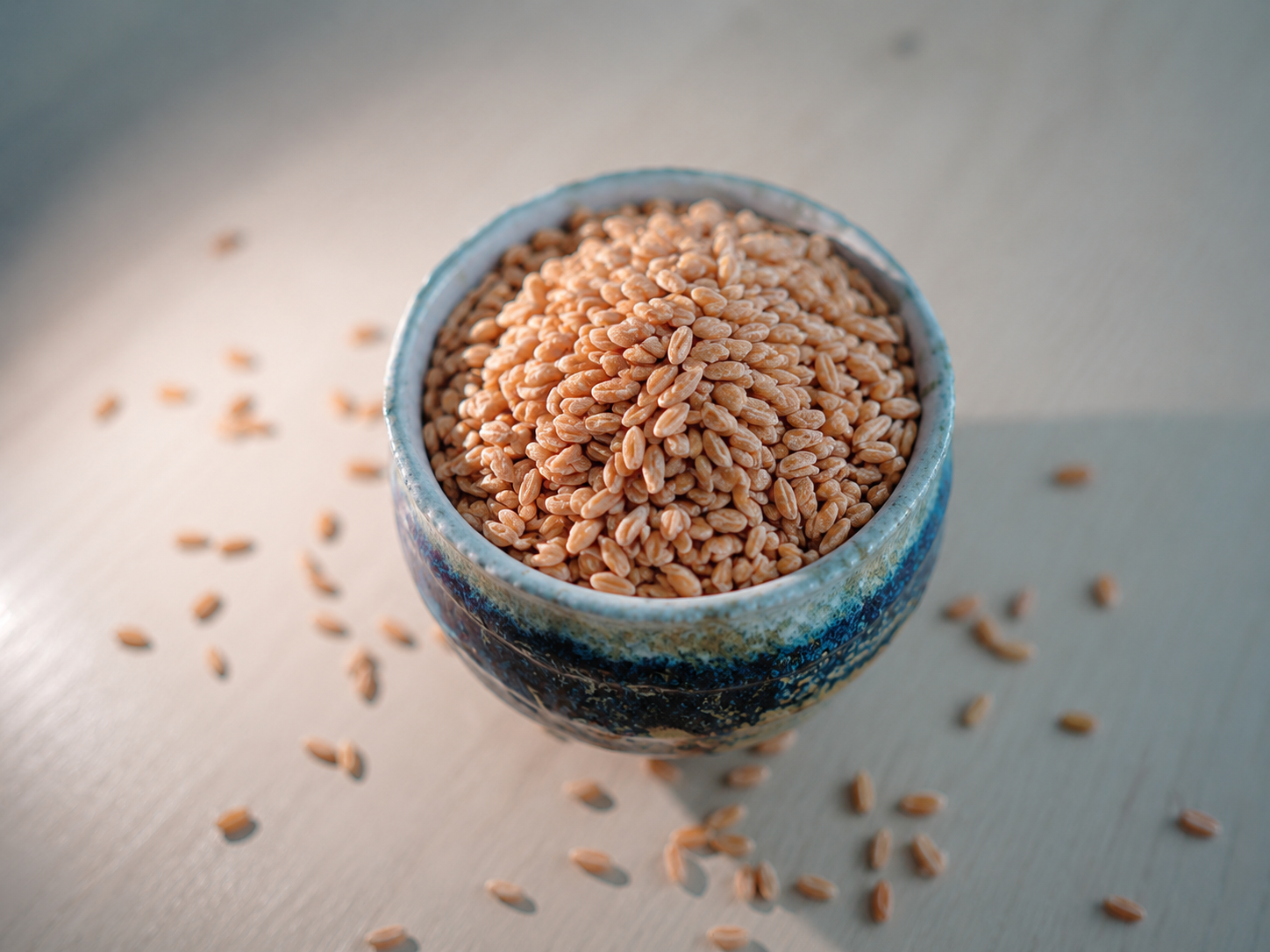
Farro is an ancient wheat grain with a nutty flavour and a pleasantly chewy texture. It is useful as a higher-fibre, more substantial alternative to rice, couscous or pasta in vegetarian meals. Because farro is a type of wheat, it contains gluten and is not suitable for people with coeliac disease or wheat allergy.
Macros are per 100g of the cooked ingredient (e.g. oats, quinoa, lentils and other pantry staples that require cooking). Nutritional values are estimated using recognised nutrition databases and calorie-tracking software to provide a practical guide, although they may vary depending on the exact ingredients and brands you use.
Origin
Farro is an old family of wheat grains traditionally associated with the Mediterranean, Middle East and parts of Europe. The word can refer to different ancient wheat types, especially emmer, einkorn and spelt, with emmer farro being especially common in Italian cooking. It has long been used in rustic soups, grain salads, porridges and simple peasant-style dishes because it stores well and has a hearty texture.
Culinary uses
- · grain bowls
- · salads
- · soups
- · risotto-style farrotto
- · stews
- · pilafs
- · stuffed vegetables
Cooking guide
Rinse farro before cooking. Pearled farro cooks fastest, usually in 20–30 minutes, while semi-pearled or whole farro can take 35–60 minutes depending on the type and age of the grain. Simmer in plenty of salted water, like pasta, until tender but still chewy, then drain. For a softer texture, soak whole farro for a few hours or overnight before cooking. Farro can also be cooked directly into soups or used risotto-style by gradually adding stock.
Storage
Store dry farro in an airtight container in a cool, dark cupboard. Wholegrain farro keeps longer than pearled farro, but all types are best used within a few months once opened for the freshest flavour. Cooked farro should be refrigerated in a sealed container and used within 3–4 days, or frozen in portions for meal prep.
Buying guide
Choose pearled farro if you want the quickest cooking time. Choose semi-pearled farro for a balance of speed, chew and fibre. Choose whole farro if you want the most intact grain and do not mind a longer cooking time. Check labels carefully, as farro can refer to emmer, spelt or einkorn depending on the brand. Avoid farro if you need a gluten-free grain.
Health benefits
- fibre
- iron
- magnesium
- zinc
- steady energy
- filling