Grains & Pseudocereals
Buckwheat
Fagopyrum esculentum
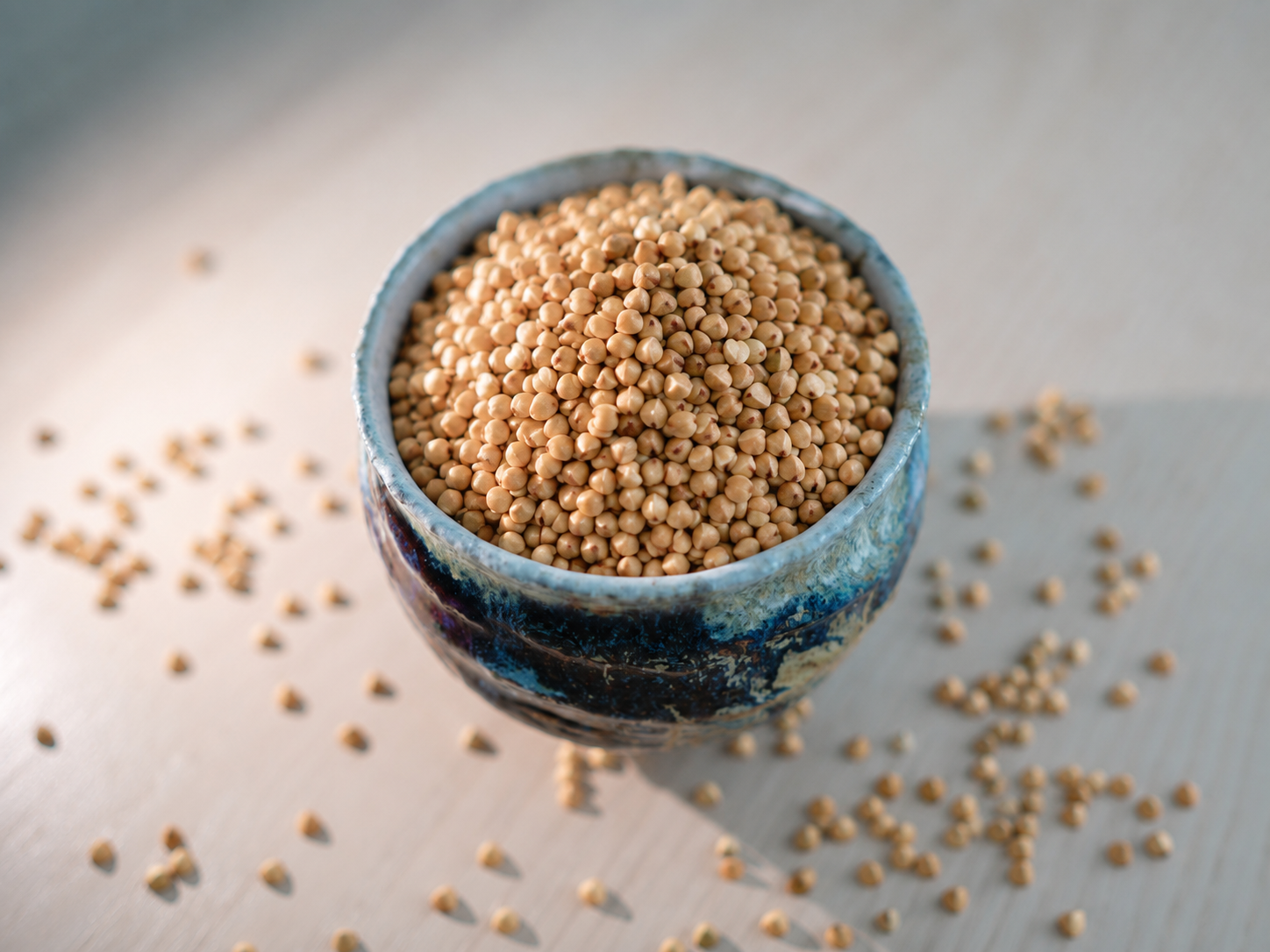
Buckwheat is a naturally gluten-free pseudocereal with a nutty, earthy flavour and a soft but slightly chewy texture when cooked. Despite its name, it is not related to wheat. Its cooked protein content is moderate, but it contains all nine essential amino acids and works well as a grain-like base for vegetarian meals, crepes, noodles and porridges.
Macros are per 100g of the cooked ingredient (e.g. oats, quinoa, lentils and other pantry staples that require cooking). Nutritional values are estimated using recognised nutrition databases and calorie-tracking software to provide a practical guide, although they may vary depending on the exact ingredients and brands you use.
Origin
Buckwheat is believed to have originated in Asia and has been cultivated for centuries across China, Central Asia, Eastern Europe, Russia and Japan. It became especially important in colder regions because it grows quickly and can tolerate poor soils. Today, it appears in many traditional foods, from Russian kasha and French galettes to Japanese soba noodles and Eastern European porridges.
Culinary uses
- · kasha
- · grain bowls
- · porridge
- · soba noodles
- · galettes
- · pancakes
- · salads
Cooking guide
Rinse buckwheat groats before cooking. Use about 1 part buckwheat to 2 parts water, bring to a boil, then simmer gently for 10–15 minutes until tender. Toasted buckwheat, often called kasha, has a stronger nutty flavour and cooks slightly faster. For a fluffier texture, avoid over-stirring and let it rest covered for a few minutes after cooking. Buckwheat flour can be used in pancakes, crêpes, galettes, noodles and gluten-free baking blends.
Storage
Store dry buckwheat groats or flour in an airtight container in a cool, dark cupboard. Because buckwheat contains natural oils, the flour can turn stale faster than whole groats, so use it within a few months once opened. For longer storage, keep buckwheat flour in the fridge or freezer. Cooked buckwheat should be refrigerated and used within 3–4 days.
Buying guide
Choose raw buckwheat groats for a milder flavour and softer texture. Choose toasted buckwheat or kasha for a deeper, nuttier taste. Buckwheat flour is useful for pancakes, galettes and gluten-free baking, but check whether it is pure buckwheat or part of a flour blend. If buying soba noodles, check the label carefully, as many contain wheat as well as buckwheat.
Health benefits
- complete protein
- gluten-free
- fibre
- magnesium
- manganese
- copper
- steady energy
- filling
- grain alternative
- wheat-free