Grains & Pseudocereals
Amaranth
Amaranthus spp.
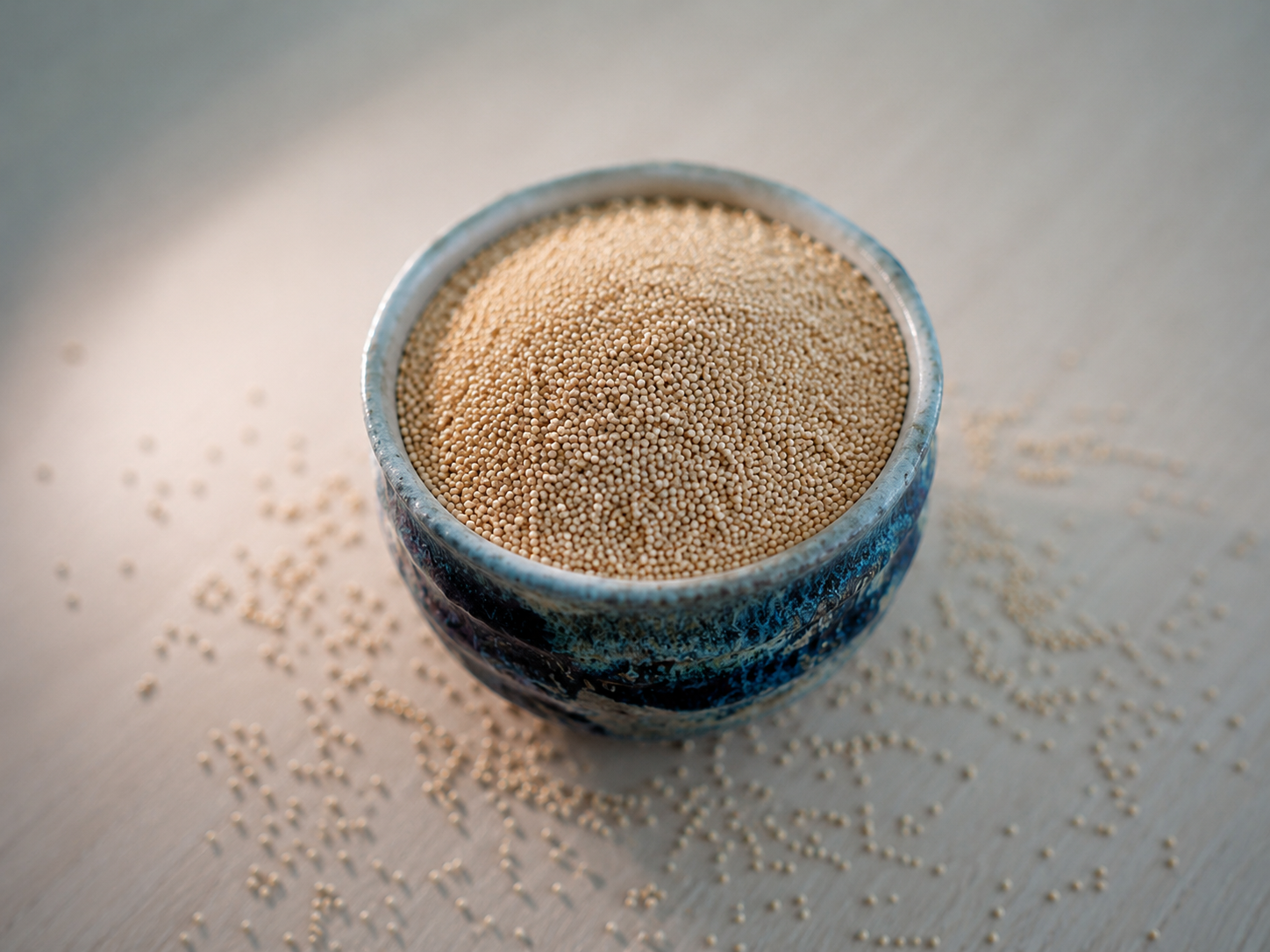
Amaranth is a naturally gluten-free pseudocereal with a nutty, slightly earthy flavour and an unusually strong protein profile for a grain-like ingredient. In India, it is often known as rajgira or ramdana, sometimes translated as “God’s grain”, and is commonly used in fasting foods. Rich in fibre, minerals and essential amino acids, it is a useful base for vegetarian meals that need more substance than rice or couscous.
Macros are per 100g of the cooked ingredient (e.g. oats, quinoa, lentils and other pantry staples that require cooking). Nutritional values are estimated using recognised nutrition databases and calorie-tracking software to provide a practical guide, although they may vary depending on the exact ingredients and brands you use.
Origin
Amaranth has been cultivated for thousands of years in Central and South America, where it was an important crop for Indigenous communities including the Aztecs. Although it declined after colonisation, it has regained attention as a resilient, nutrient-dense crop that grows well in challenging climates. Different amaranth species are also used across Africa, India and Asia, both for their seeds and leafy greens. In India, the seed is commonly known as rajgira or ramdana — often interpreted as “God’s grain” — and is traditionally used during fasting periods, especially in laddoos, chikkis, rotis and porridges.
Culinary uses
- · porridge
- · grain bowl base
- · soups and stews
- · crunchy topping
- · ground into flour for pancakes and flatbreads
- · baking
- · rajgira laddoos
- · ramdana chikki
Cooking guide
Rinse amaranth well before cooking. Use about 1 part amaranth to 2.5–3 parts water, then simmer gently for 20–25 minutes until thick and tender. The texture is naturally soft, slightly sticky and porridge-like rather than fluffy. For a drier grain bowl texture, cook with slightly less water, spread it out after cooking and let it steam-dry for a few minutes. To pop amaranth, heat a dry pan until hot, add a small spoonful of seeds at a time, shake constantly and remove as soon as they pop.
Storage
Store dry amaranth in an airtight container in a cool, dark cupboard. Because it contains natural oils, it can turn rancid faster than white rice or refined grains, so use within a few months once opened. For longer storage, keep it in the fridge or freezer. Cooked amaranth should be refrigerated and used within 3–4 days.
Buying guide
Look for whole amaranth seeds if you want to cook it as a porridge, grain bowl base or soup thickener. Choose amaranth flour for baking, but check whether it is pure amaranth or part of a gluten-free blend. Fresh amaranth greens may also be sold in Indian, African, Caribbean or Asian grocery shops under local names. For the best flavour, avoid packets that smell oily, musty or bitter.
Health benefits
- plant protein
- naturally gluten-free
- complete protein
- iron
- magnesium
- alternative to rice or couscous
- filling