Grains & Pseudocereals
Teff
Eragrostis tef
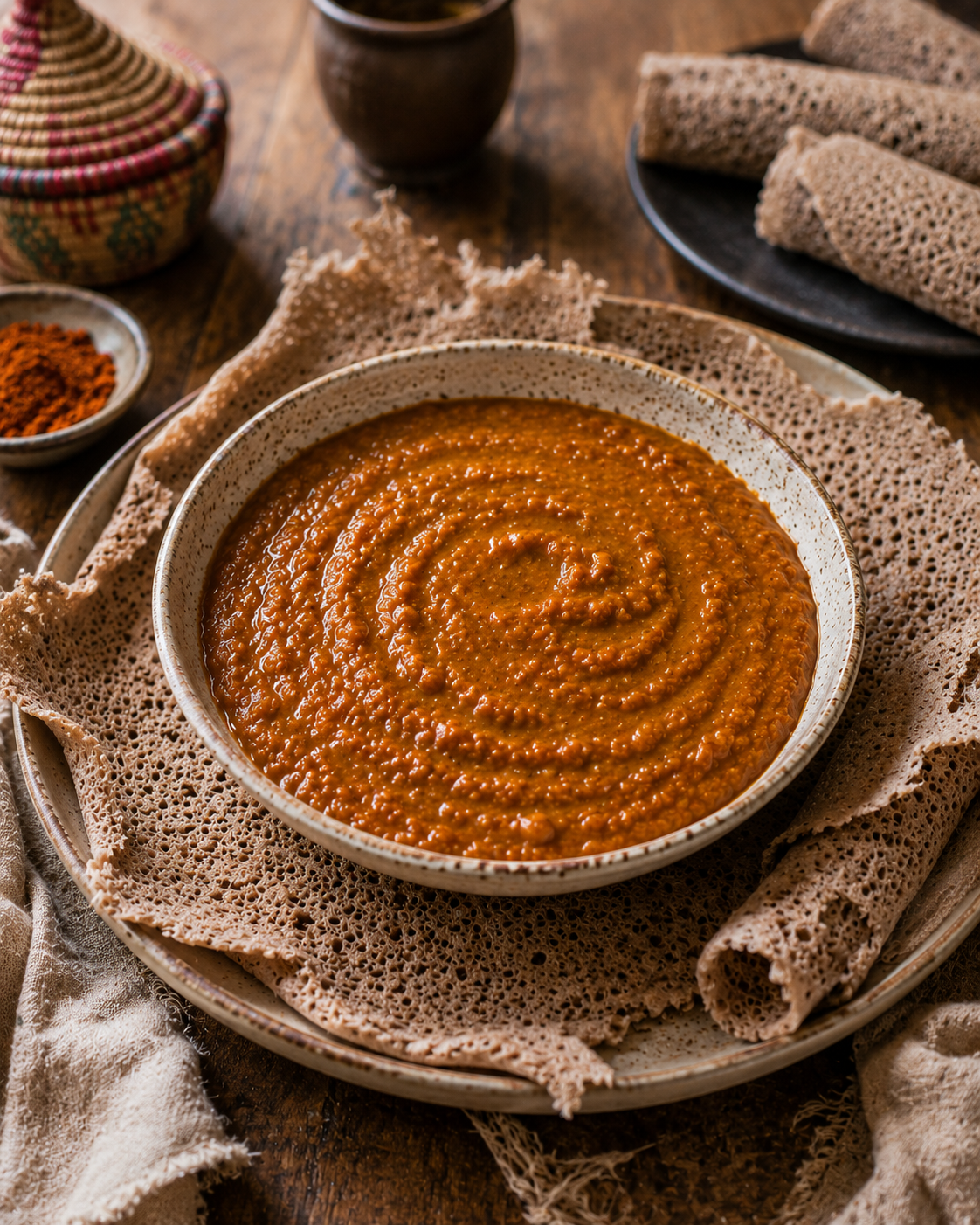
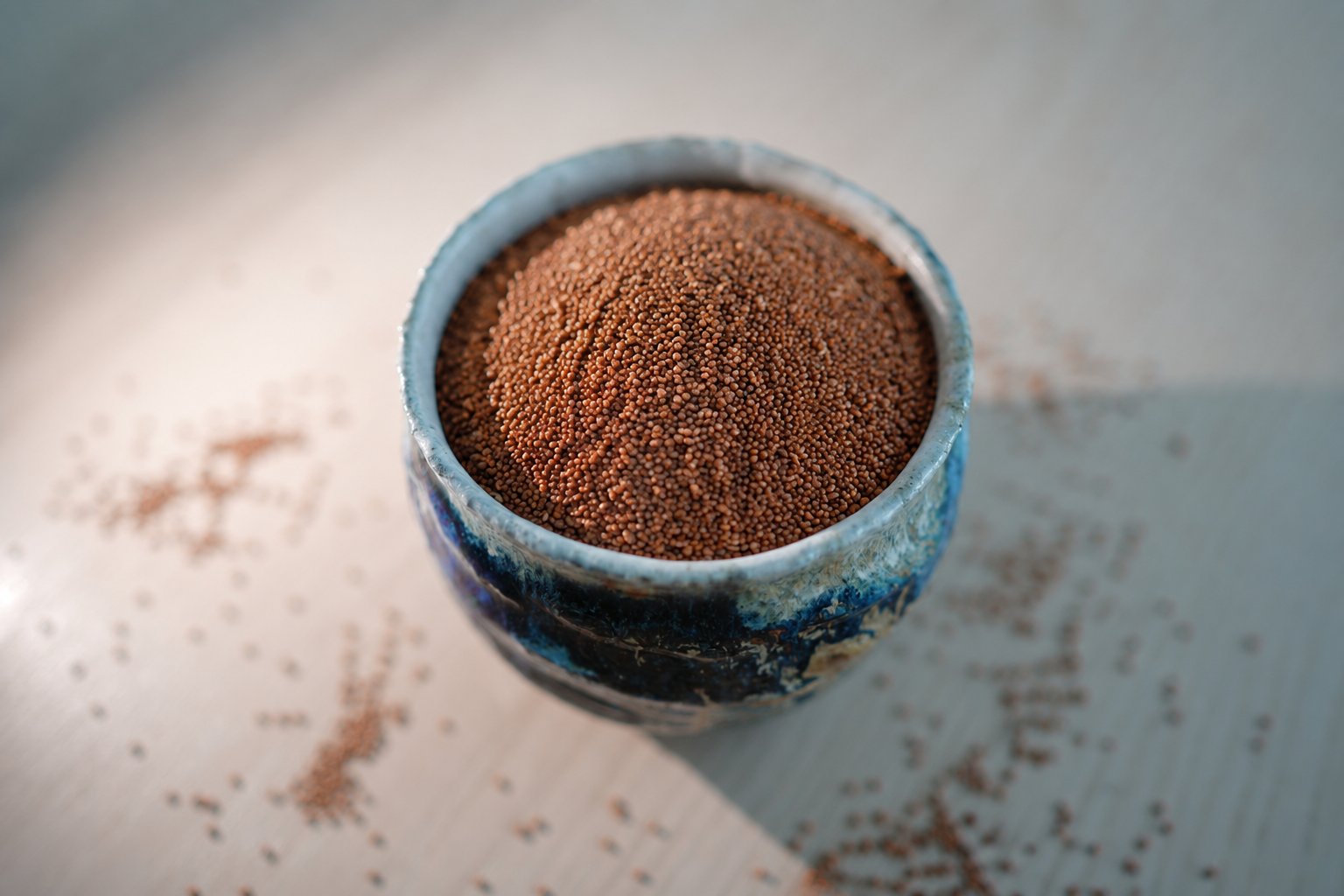
Teff is a tiny ancient cereal grain with a mild, nutty, slightly earthy flavour. It is best known as the grain used to make Ethiopian and Eritrean injera, but it can also be cooked into porridge, added to soups or used as flour in pancakes, flatbreads and baking. Its cooked protein content is moderate, but it brings useful fibre, minerals and slow-release carbohydrates to vegetarian meals.
Macros are per 100g of the cooked ingredient (e.g. oats, quinoa, lentils and other pantry staples that require cooking). Nutritional values are estimated using recognised nutrition databases and calorie-tracking software to provide a practical guide, although they may vary depending on the exact ingredients and brands you use.
Origin
Teff has been cultivated for thousands of years in Ethiopia and Eritrea, where it remains a central staple crop. Its tiny seeds are highly resilient and can grow in challenging conditions, making it important in highland agriculture. Teff is most closely associated with injera, the fermented flatbread that forms the base of many Ethiopian and Eritrean meals, often served with lentil, chickpea, bean or vegetable stews.
Culinary uses
- · injera
- · porridge
- · flatbreads
- · pancakes
- · baking
- · soups
- · grain bowls
Cooking guide
To cook whole teff as a porridge, use about 1 part teff to 3 parts water or milk, then simmer gently for 15–20 minutes, stirring often, until thick and creamy. For a looser texture, add more liquid. Teff flour can be fermented to make injera, or mixed into pancakes, crêpes, muffins, breads and gluten-free baking blends. Because teff is very small, it does not cook into separate fluffy grains like rice or quinoa.
Storage
Store whole teff or teff flour in an airtight container in a cool, dark cupboard. Because wholegrain flours can turn stale faster than intact grains, use teff flour within a few months once opened. For longer storage, keep it in the fridge or freezer. Cooked teff porridge should be refrigerated and used within 3–4 days.
Buying guide
Choose whole teff if you want to cook it as porridge or experiment with grain bowls. Choose teff flour for injera, pancakes, flatbreads and baking. Brown teff has a deeper, earthier flavour, while ivory teff is milder. Teff is naturally gluten-free, but choose certified gluten-free teff if you have coeliac disease or need to avoid cross-contamination.
Health benefits
- plant protein
- fibre
- iron
- magnesium
- calcium
- manganese
- steady energy
- filling
- gluten-free