Dairy
Kefir
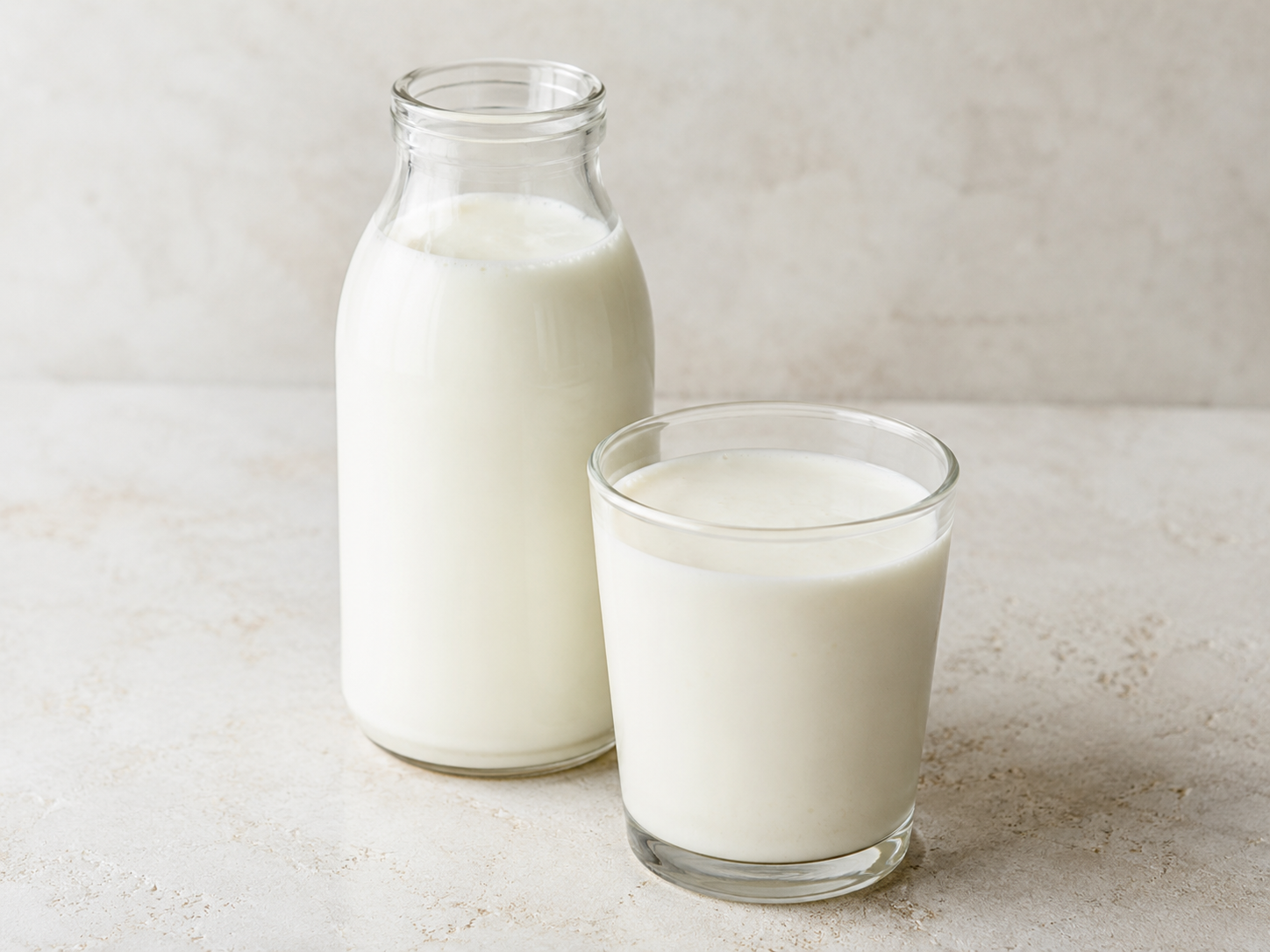
Kefir is a fermented milk drink with a tangy flavour, light fizz and pourable texture. It is lower in protein than skyr or cottage cheese, but it still provides complete dairy protein, calcium and live cultures. It works well in smoothies, overnight oats, dressings, marinades and breakfast bowls when you want a lighter fermented dairy option.
Macros are per 100g of the cooked ingredient (e.g. oats, quinoa, lentils and other pantry staples that require cooking). Nutritional values are estimated using recognised nutrition databases and calorie-tracking software to provide a practical guide, although they may vary depending on the exact ingredients and brands you use.
Origin
Kefir is traditionally associated with the Caucasus region, where milk was fermented with kefir grains to create a tangy, slightly effervescent drink. These grains are not cereal grains, but a living culture of bacteria and yeasts. Over time, kefir spread across Eastern Europe, Russia and beyond, becoming popular as a cultured dairy drink used both on its own and in everyday cooking.
Culinary uses
- · smoothies
- · overnight oats
- · breakfast bowls
- · dressings
- · dips
- · marinades
- · pancakes
Cooking guide
Kefir is ready to drink straight from the bottle. Shake gently before using, as natural separation can happen. Use it in smoothies, overnight oats, bircher muesli, salad dressings, cold soups, dips or pancake batter. Avoid boiling kefir, as high heat can damage its live cultures and may make it split. For warm recipes, stir it in off the heat or use it as a cool topping.
Storage
Keep kefir refrigerated and use by the date on the pack. Once opened, reseal tightly and use within a few days, following the brand guidance. Some natural fizz, tang and separation are normal, but discard kefir if it smells unpleasant, looks mouldy or becomes excessively fizzy. Do not leave it at room temperature for long periods unless you are intentionally fermenting homemade kefir.
Buying guide
Choose plain unsweetened kefir for the most versatile option and the best protein-to-sugar ratio. Flavoured kefir can be convenient, but check the label for added sugar. Traditional dairy kefir is usually made from cow, goat or sheep milk. Water kefir and coconut kefir are fermented drinks too, but they do not have the same protein profile as dairy kefir.
Health benefits
- complete protein
- live cultures
- calcium
- vitamin B12
- phosphorus
- gut-friendly
- fermented dairy
- low fat option
- drinkable protein