Grains & Pseudocereals
Oat
Avena sativa
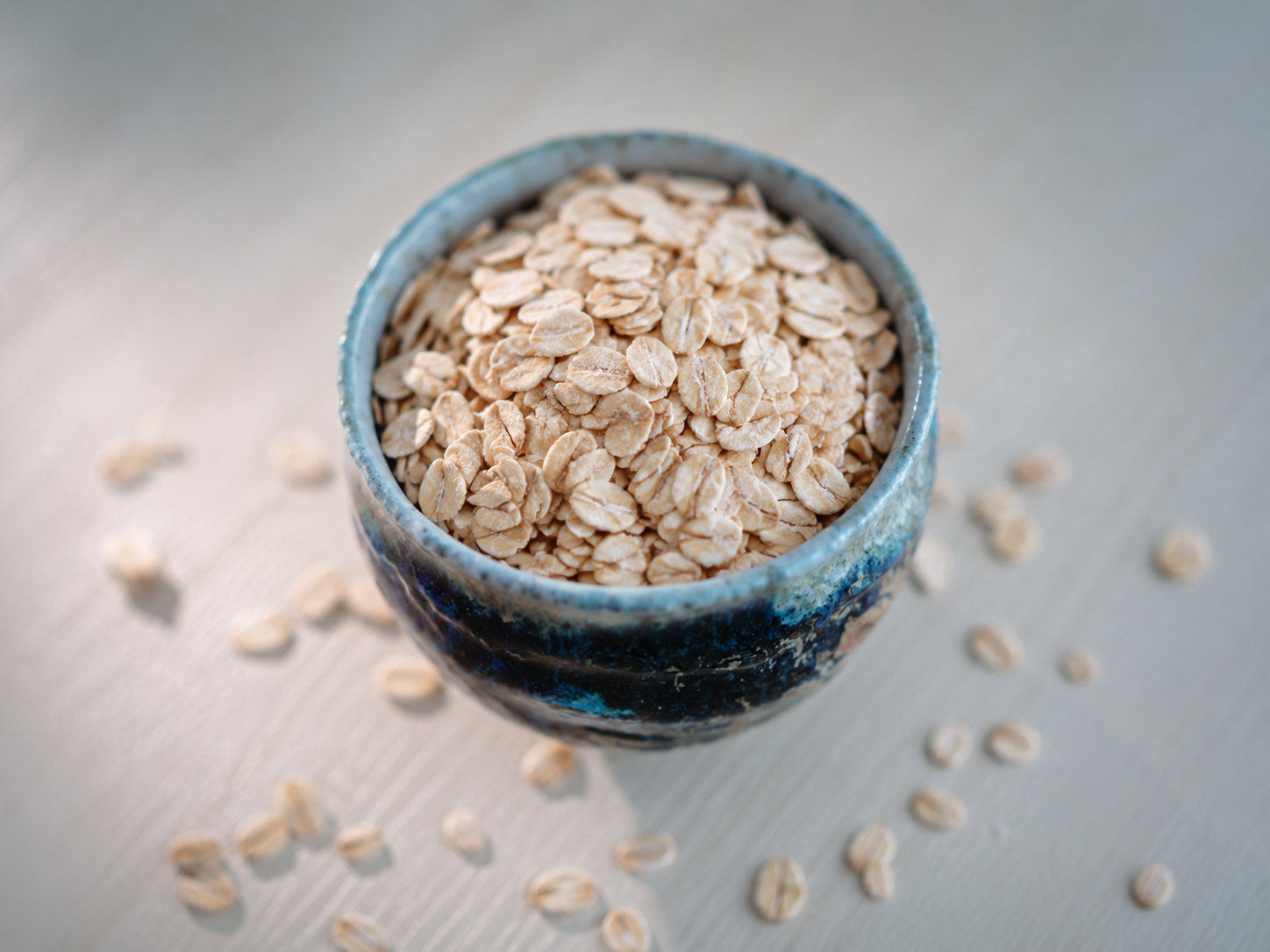
Oats are a mild, creamy cereal grain used in porridge, baking, smoothies and savoury meals. Their cooked protein content is moderate, but they contain useful fibre, slow-digesting carbohydrates and minerals, making them a reliable base for filling vegetarian breakfasts and meal-prep recipes.
Macros are per 100g of the cooked ingredient (e.g. oats, quinoa, lentils and other pantry staples that require cooking). Nutritional values are estimated using recognised nutrition databases and calorie-tracking software to provide a practical guide, although they may vary depending on the exact ingredients and brands you use.
Origin
Oats have been cultivated for thousands of years across Europe and Western Asia, especially in cooler climates where they grew more reliably than some other grains. They became closely associated with porridges, oatcakes and simple everyday meals in Northern Europe, Scotland and Ireland. Today, oats are used globally in breakfast bowls, baking, granola, plant-based drinks and high-fibre recipes.
Culinary uses
- · porridge
- · overnight oats
- · granola
- · baked oats
- · pancakes
- · smoothies
- · oatcakes
Cooking guide
Rolled oats cook quickly and are best for porridge, overnight oats, granola and baking. Use about 1 part oats to 2 parts water or milk, then simmer for 5–10 minutes until creamy. Steel-cut oats take longer, usually 20–30 minutes, and have a chewier texture. Instant oats cook fastest but can become softer and less textured. For savoury oats, cook them with water or stock, then top with vegetables, eggs, tofu, yoghurt or legumes.
Storage
Store oats in an airtight container in a cool, dry cupboard. Because oats contain natural oils, they can turn stale or rancid over time, especially once opened. For longer storage, keep them in the fridge or freezer. Cooked oats should be refrigerated and used within 3–4 days.
Buying guide
Choose rolled oats for the most versatile option. Choose steel-cut oats if you want a chewier texture and do not mind a longer cooking time. Instant oats are convenient, but check the label for added sugar or flavourings. Choose certified gluten-free oats if you have coeliac disease or need to avoid gluten, because oats are often processed near wheat, barley or rye.
Health benefits
- fibre
- beta-glucan
- steady energy
- filling
- magnesium
- manganese
- phosphorus
- iron
- low saturated fat