Grains & Pseudocereals
Spelt
Triticum spelta
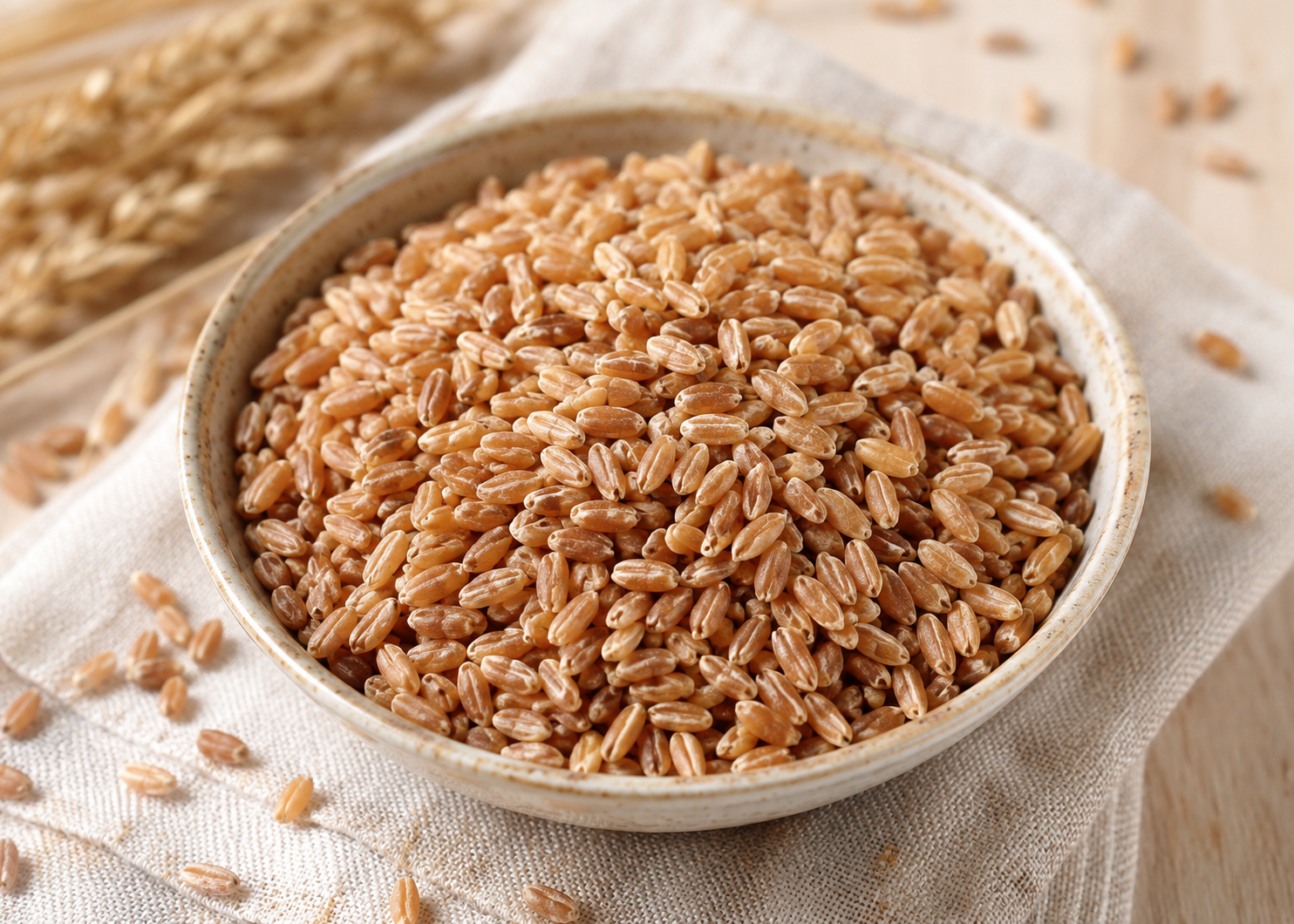
Spelt is an ancient wheat grain with a nutty, slightly sweet flavour and a chewy texture when cooked. It works well as a more substantial alternative to rice, couscous or pasta in vegetarian meals. Because spelt is a type of wheat, it contains gluten and is not suitable for people with coeliac disease or wheat allergy.
Macros are per 100g of the cooked ingredient (e.g. oats, quinoa, lentils and other pantry staples that require cooking). Nutritional values are estimated using recognised nutrition databases and calorie-tracking software to provide a practical guide, although they may vary depending on the exact ingredients and brands you use.
Origin
Spelt is one of the ancient wheat species cultivated in Europe and parts of Western Asia for thousands of years. It was widely used before modern bread wheat became dominant, especially in Central and Northern Europe. Today, spelt is popular again in wholegrain cooking, baking and plant-forward meals because of its nutty flavour, chewy texture and rustic feel. In French, it is often called épeautre.
Culinary uses
- · grain bowls
- · salads
- · soups
- · risotto-style speltotto
- · stews
- · pilafs
- · bread
Cooking guide
Rinse whole spelt berries before cooking. Simmer in plenty of salted water, like pasta, for 35–60 minutes depending on the type and age of the grain, then drain when tender but still chewy. Soaking whole spelt for a few hours or overnight can reduce cooking time. Pearled spelt cooks faster, usually in 20–30 minutes. Spelt flour can be used in bread, pancakes, muffins, biscuits and rustic bakes, although it behaves differently from modern wheat flour and can become dense if overworked.
Storage
Store dry spelt grains or flour in an airtight container in a cool, dark cupboard. Whole spelt berries keep better than spelt flour, which can turn stale faster because it contains natural oils. For longer storage, keep spelt flour in the fridge or freezer. Cooked spelt should be refrigerated in a sealed container and used within 3–4 days, or frozen in portions.
Buying guide
Choose whole spelt berries if you want the most intact grain and a firm, chewy texture. Choose pearled spelt if you want a quicker-cooking option for everyday bowls, soups and salads. Choose spelt flour for baking, but check whether it is wholemeal or refined. Spelt is sometimes easier to find in organic shops, health food stores or European grocery sections. Avoid it if you need a gluten-free grain.
Health benefits
- plant protein
- fibre
- iron
- magnesium
- zinc
- phosphorus
- steady energy
- filling